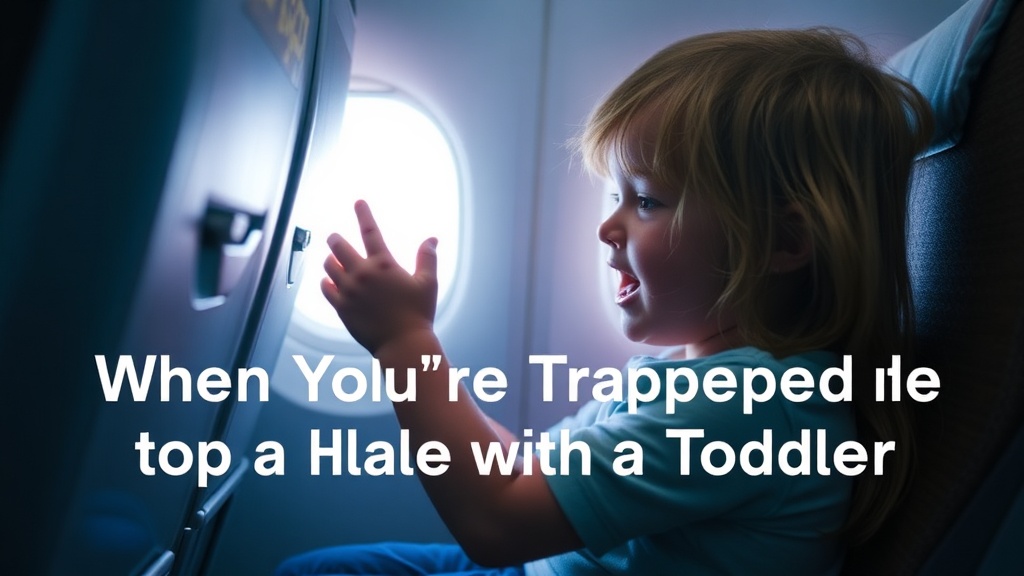
What Actually Works When You're Trapped on a Plane with a Toddler

You're three hours into a cross-country flight. The seatbelt sign just dinged. Your three-year-old has already eaten the emergency exit card, spilled apple juice on the passenger next to you, and declared—at impressive volume—that they need to poop "right now." The bathroom? Occupied. Your carry-on of carefully curated activities? Already exhausted. Welcome to the reality that no Instagram family travel account ever shows you.
This isn't about achieving a peaceful flight. That's a fantasy sold by people who've never tried to reason with a sleep-deprived two-year-old at 30,000 feet. This is about survival—pure, tactical, get-through-this-without-crying (you, not them) survival. After eight years of flying with children and one memorable incident involving a barf bag and a sudden nosedive, I've learned what actually moves the needle when you're trapped in a metal tube with tiny humans who have zero interest in your itinerary.
Why Does My Toddler Lose Their Mind the Second We Board?
Understanding the enemy helps. And I use "enemy" lovingly—your child isn't being difficult; their nervous system is being hijacked by a perfect storm of sensory overload. Airports are already overwhelming: fluorescent lights, constant announcements, the weird energy of thousands of stressed adults. Then you board a plane where the air pressure changes, the noise is relentless, and they're strapped into a seat that—let's be honest—wasn't designed for anyone under four feet.
The meltdown isn't behavioral; it's biological. Their ears pop uncomfortably. They can't understand why they can't run around. And they've probably been awake since 4 AM because you thought an early flight would mean they'd sleep. (Spoiler: They won't. Early flights just mean you start exhausted.)
Your job isn't to prevent the meltdown—it's to shorten the recovery time. Pack a "reset kit" in your personal item, not your overhead bag: noise-canceling headphones sized for them, a small weighted lap pad (or a heavy book wrapped in their favorite blanket), and something they can squeeze or fidget with. When the spiral starts, don't reason. Don't negotiate. Hand them the kit and wait. Some kids need ten minutes of compression and quiet before they can hear you again. That's normal. Work with their nervous system, not against it.
What Should I Actually Pack in My Carry-On?
Pinterest will tell you to assemble elaborate busy bags with themed activities and laminated worksheets. Those people have never been pawing through a backpack while holding a squirming child and blocking the beverage cart. You need three things: novelty, sugar, and screens.
Novelty means items they've never seen before. Hit the dollar store the day before your trip and grab five small, weird things: a flashlight keychain, a mini slinky, a notebook with a monster on it. Wrap each one in tissue paper like a gift. When boredom hits—every 20-30 minutes with toddlers—you produce a new "present." The unwrapping itself buys you five minutes. The novelty buys you another fifteen.
Sugar is controversial, but hear me out: you're not parenting for optimal nutrition in transit. You're managing blood sugar crashes that turn reasonable children into feral creatures. Pack lollipops—not the organic kind, the bright artificial ones that take forever to finish. A lollipop occupies their mouth (reducing crying), stabilizes blood sugar, and physically prevents them from talking for twelve blessed minutes. Also pack pouches of applesauce, cheese crackers, and whatever their normal comfort snack is. Airlines run out of kid-friendly food. Assume you'll get nothing.
Screens are your nuclear option, and you shouldn't feel guilty about deploying them. Download shows ahead of time—streaming doesn't work reliably at altitude. Buy kid-sized headphones that actually stay on (the Puro Sound Labs BT2200 are indestructible and volume-limiting). And here's the pro move: save the tablet for the second half of the flight. Use up your physical activities and snacks first, then bring out the screen when they're truly desperate. It's like pacing yourself in a marathon.
How Do I Handle the Bathroom Situation?
Airplane bathrooms are barely functional for adults. For toddlers in diapers, they're a logistical nightmare. For newly potty-trained kids, they're a trauma waiting to happen. Here's what works: if your child is in diapers, don't change them in that coffin-sized bathroom unless it's a code-brown situation. Bring a portable changing pad and do a standing change at your seat using the seat back for leverage. Yes, people will stare. They've already judged you for having a child on a plane—might as well commit to the bit.
If your child is potty training, put them back in pull-ups for the flight. I know, I know—you've worked so hard on the training. But the stress of "holding it" while the seatbelt sign is on, or navigating that tiny stall mid-turbulence, isn't worth a regression. Explain it clearly: "We're wearing special airplane underwear today. It catches accidents so we don't have to worry." Normalize it. They won't remember in three days.
For older kids, establish bathroom rules before you board: try before we get on, try when the drink cart passes (that's your cue that the aisle will be blocked soon), and try again before descent. Descent is the worst time to need the bathroom—pressure changes, seatbelt signs, and turbulence combine to make it nearly impossible. Speaking of descent, that's when ear pain hits hardest.
What's the Deal with Ear Pain and How Do I Stop the Screaming?
Ear pain during takeoff and landing happens because the Eustachian tube—which equalizes pressure—is narrower and more horizontal in children. It doesn't vent pressure efficiently, creating that sharp, stabbing pain that makes reasonable children shriek like they're being murdered. The old advice to "yawn or chew gum" is useless for kids under six who can't control those mechanisms.
What actually works: timing and swallowing. Time feeds or drinks for takeoff and landing. The swallowing motion helps equalize pressure. For infants, nurse or bottle-feed during these windows. For toddlers, a straw cup or sippy cup works—straws create more suction and more frequent swallows. For older kids, lollipops or gummy candy (if they're old enough not to choke) forces repeated swallowing.
If your child has a cold or congestion, consider rescheduling. I know—that's not always possible. But flying with a congested child is miserable for everyone. If you must fly, use pediatric nasal spray 30 minutes before takeoff and landing to reduce inflammation in the nasal passages. The American Academy of Pediatrics has guidance on managing congestion in children that applies directly to this situation.
Some kids are simply more sensitive to pressure changes. If your child has a history of severe ear pain, talk to your pediatrician about pain management options before you fly. Ibuprofen 30 minutes before descent can reduce inflammation and make the experience survivable. It's not over-medicating—it's humane.
How Do I Recover After We Land?
The flight ends, but the dysregulation doesn't. Your child has been holding it together under extreme circumstances, and the moment you reach the rental car or hotel room, they will fall apart. This is called restraint collapse—it's real, it's normal, and it's actually a sign that they trusted you enough to hold it together in public.
Don't schedule anything for the first two hours after landing. Not dinner, not sightseeing, not "just a quick stop at the grocery store." Check into your accommodation and give them physical release: run in a field, jump on the hotel bed (remove the decorative pillows first), wrestle on the floor. They need proprioceptive input to reset their nervous system. Then feed them—something familiar, not adventurous. Mac and cheese from the hotel restaurant beats local cuisine when they're melting down.
You also need recovery time. Order room service. Put them in front of a screen. Take a shower. Flying with children is emotionally exhausting in ways that business travel never prepares you for. The child development experts at Verywell Family emphasize that parental regulation matters more than perfect planning—if you're calm, they have a reference point. If you're frayed, they amplify that energy.
Here's the truth no one tells you: some flights will be terrible regardless of your preparation. You'll get the glares from other passengers. You'll feel like a failure when your kid won't stop kicking the seat. You'll swear you'll never fly again. And then six months later, you'll book another trip because the alternative—never going anywhere—is worse than one bad flight. That's the real secret to family travel: not preventing the chaos, but surviving it together.