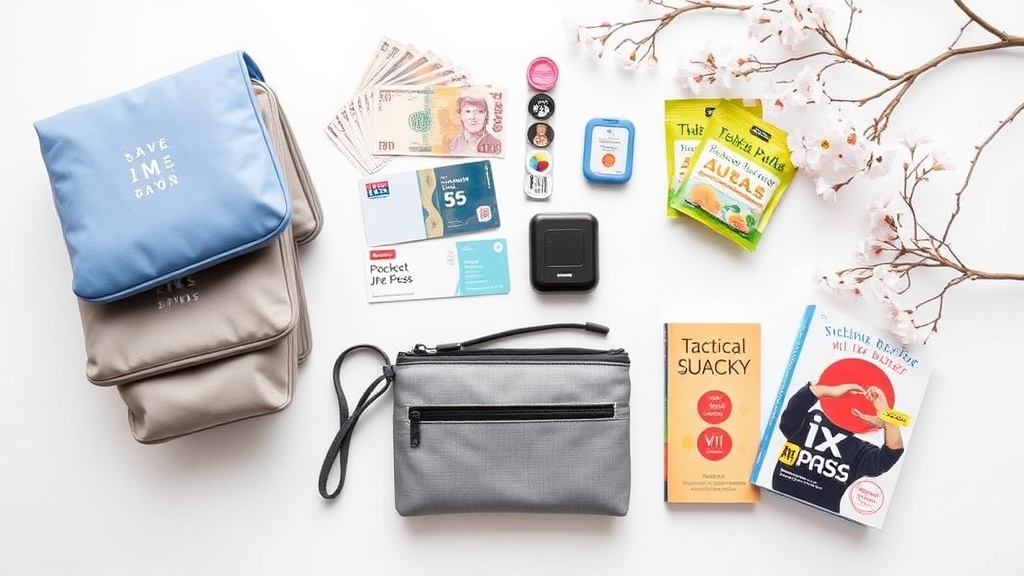
The 2-Week Japan Survival Kit: A Family Packing List

Listen, I’m not here to tell you how to pack your 10-step skincare routine or your favorite pair of silk pajamas. You’re traveling with children. You’re going to be tired, you’re going to be carrying someone else’s backpack, and you’re going to be navigating the busiest train stations on the planet. You don’t need a wardrobe; you need a survival kit.
I’ve refined our "Planned Spontaneity" packing system over years of travel failures (the Denver airport incident remains our North Star for what not to do). For Japan, we’ve leaned into the "less is more" philosophy, mostly because Japanese train stations involve a lot of stairs and dragging a massive suitcase is a tactical error I only want to make once.
The Golden Rule: The Carry-On Only Challenge
I know, I know. "Sloane, we’re going for two weeks!" Trust me. We are each carrying one regulation-sized carry-on and a personal item. Why? Because Japanese trains are efficient, but their overhead racks and luggage storage areas are not designed for your American-sized checked luggage. If you can’t lift it over your head in 4 seconds, don’t bring it.
The Layered Defense System
- Packing Cubes: If you aren’t using these, are you even living? One cube per person per category. When the 4-year-old decides they "must" wear the dinosaur shirt at 6 AM, you don't want to explode your entire bag to find it.
- Walking Shoes (The Real Kind): You will walk 20,000 steps a day in Tokyo. This is not the time for "cute but slightly uncomfortable" boots. If your shoes haven't been broken in for at least a month, leave them at home. (And make sure they're easy to slip on and off—Japanese culture involves a lot of shoe-removal scenarios.)
- The Universal Adapter + Power Strip: Japan uses the same two-prong plugs as the US, but they often don't have the third ground pin. Bring a small power strip so you can charge James's tech kit, your phone, and the kids' tablets from a single outlet in your tiny hotel room.
The Kid-Specific Tactical Gear
- The Lightweight Stroller: Even if your kid is "past" strollers, Tokyo is a lot of walking. A lightweight umbrella stroller that folds with one hand is a lifesaver. It doubles as a mobile nap station and a luggage cart.
- Portable White Noise: Japanese hotels are remarkably quiet, but the occasional city siren or hallway chatter can derail a sleep-deprived toddler.
- The Bribe Stash: I keep a small bag of stickers, tiny toy cars, and new-to-them coloring books hidden in my personal item. These are only deployed in the "Absolute Emergency" zone (i.e., a 2-hour train delay or a long wait at the JR Pass office).
The Internal Affairs Folder
This is my project manager brain coming back to life. In a single, physical folder (yes, paper, because technology fails when you're underground in Shinjuku Station):
- Printed JR Pass vouchers (the physical exchange order is non-negotiable).
- Hard copies of hotel confirmations and addresses in Japanese (for taxi drivers).
- A copy of everyone's passport photo page.
The Japan-Specific Essentials
- Coin Purse: Japan is still very cash-heavy in some places, and you will end up with a pocket full of 100-yen and 500-yen coins. Trust me, you'll need them for the vending machines.
- Hand Towel: Many public restrooms in Japan don't have paper towels or hand dryers. Most locals carry a small "tenugui" or hand towel. Be like the locals.
- The Tactical Snack Bag (Japan Edition): I’m packing the usual staples, but leaving room for our Lawson's and FamilyMart restocks.
We’re packed. We’re light. We’re ready to pivot when the 4-year-old decides they only want to eat white rice for three days. Remember: if you forget something, Japan has some of the best stores in the world (Uniqlo and Muji are our fallback for "emergency" clothes).
Pack light. Move fast. Survive the transit.