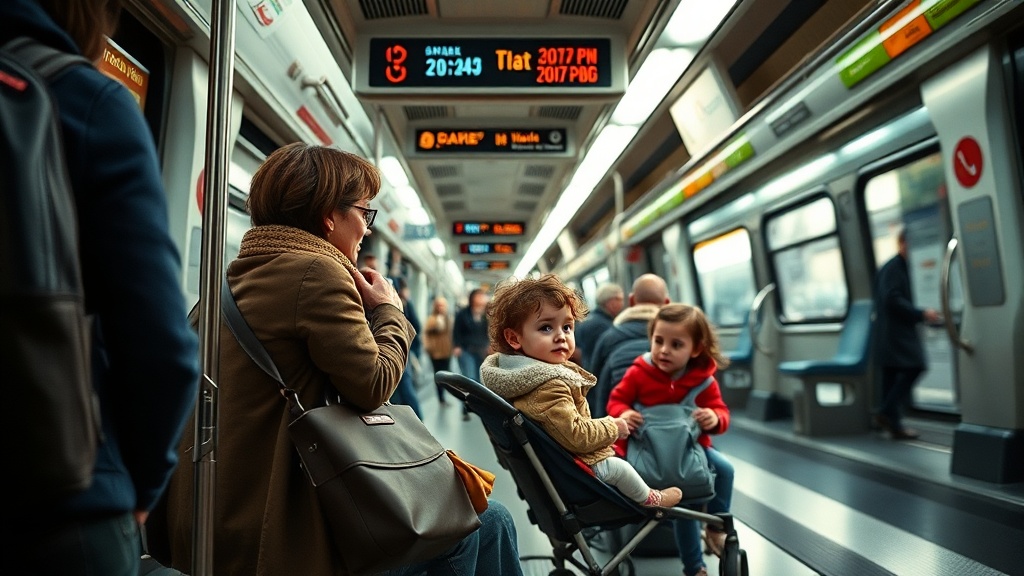
Navigating Foreign Public Transit with Toddlers and Strollers

A toddler is mid-meltdown in a crowded London Underground station. The stroller wheels are caught in a gap between the platform and the train, the backpack is heavy, and the person behind you is staring at their watch with palpable irritation. This is the reality of moving a family through a foreign city via public transit. It isn't a scenic tour; it's a tactical maneuver. This guide covers how to manage strollers, luggage, and tiny humans on trains, buses, and trams without losing your sanity or your dignity.
How do I choose the right stroller for public transit?
The best stroller for public transit is a compact, lightweight umbrella or travel stroller that can be folded with one hand. If you have to wrestle with a heavy, bulky jogger every time you hit a subway station, you will regret every decision you've ever made.
When you're hopping on and off buses in cities like Lisbon or Rome, weight is everything. You need something that won't break your back when you're carrying a sleeping child and a diaper bag simultaneously. Look for brands like Babyzen (specifically the YOYO) or GB Pockit. These are designed to be nimble and can often fit into the overhead compartments or the small spaces under seats on trains.
Avoid anything with massive, permanent wheels. While those are great for a stroll through a park, they are a nightmare on cobblestones and narrow train aisles. A compact footprint means you can tuck the stroller into a corner of the train car without blocking the entire walkway—a small mercy for your fellow passengers.
Check these features before you pack:
- One-handed fold: Because you’ll likely have a hand occupied by a toddler's hand or a snack.
- Weight: Aim for under 15 lbs if possible.
- Width: Ensure it can fit through standard narrow doors.
- Suspension: A little bit helps on bumpy streets, but don't sacrifice portability for it.
What are the best ways to manage transit-friendly luggage?
The best way to manage luggage is to use backpack-style bags or lightweight, four-wheel spinners that can be easily maneuvered through crowds. Carrying a heavy duffel bag over one shoulder while trying to lift a stroller onto a train is a recipe for a bruised ego and a sore back.
I've learned the hard way that a single, large suitcase is often more difficult to manage than two medium-sized, highly mobile bags. If you're traveling with a group, coordination is key. If you are part of a larger party, you might want to look at selecting the perfect rental home for large groups to ensure you have a home base where you can actually unpack and decompress after a day of transit-induced chaos.
The Luggage Hierarchy:
- The Backpack: Best for day trips and keeping your hands free for the "holding-on-to-the-handrail" dance.
- The Spinner: Great for airports, but be careful on cobblestone streets—they'll rattle your teeth out.
- The Crossbody: Essential for keeping your passport and phone reachable and secure.
How can I make subway travel easier with a toddler?
You can make subway travel easier by checking accessibility maps in advance and timing your trips to avoid rush hour. Most major cities have some level of accessibility, but it isn't always obvious. In many older European cities, "accessible" might mean a lift that is currently out of order (a classic way to ruin a Tuesday).
Before you even leave the hotel, use Google Maps or a local transit app to check for "step-free" routes. This is non-negotiable if you have a stroller. There is nothing more demoralizing than arriving at a station only to realize the "elevator" is a tiny, broken lift at the top of a flight of stairs.
A few tactical tips for the actual ride:
Don't wait until the last second to move toward the doors. If you see your stop approaching, start gathering your gear. It's a subtle art to move a stroller through a crowded train car without looking like you're starting a riot. If the train is packed, be prepared to fold the stroller immediately. Most transit systems require it. It's better to fold it early than to get stuck in a doorway while the conductor stares at you.
Also, keep a "transit kit" in your bag. This isn't just about diapers. It's about high-value distractions. A way-too-expensive sticker book or a new, quiet toy can buy you ten minutes of peace while you navigate a transfer.
Note: If you are traveling with multiple kids and need to keep track of everyone in a crowd, consider using color-coded lanyards for quick identification. It's a small detail that prevents a lot of panicked searching.
| Transit Type | Difficulty Level | Primary Challenge | Pro Tip |
|---|---|---|---|
| Subway/Metro | High | Stairs and narrow gaps | Find "Step-Free" stations via app |
| City Bus | Medium | Boarding with a stroller | |
| Tram/Streetcar | Low | Low floor height | Park the stroller near the door |
| Ferries | Low | Wind and boarding ramps | Secure the stroller before moving |
The reality is that public transit is often much more efficient than taxis or ride-shares, even with a toddler. You'll save money, and you'll see more of the city. But you have to go in with a plan. Don't treat it like a leisure stroll. Treat it like a mission.
The first time you try to get a stroller through a turnstile in Tokyo or a narrow subway entrance in Paris, you might feel like you're failing. You aren't. You're just doing the work. Grab your snacks, check your battery life, and keep moving.
If you find yourself overwhelmed, remember that most people are actually quite helpful—they just don't know you're struggling until you've already hit the wall. Don't be afraid to ask for help with a heavy stroller or a heavy bag. People are generally much kinder than the grumpy person in the station makes them seem.