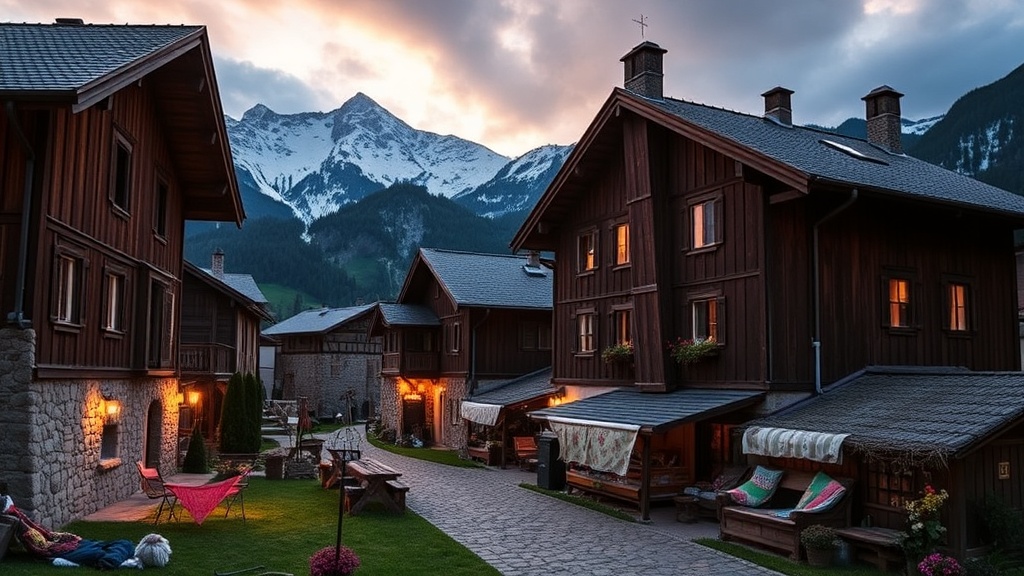
Hidden Alpine Villages: Finding Quiet Magic in the Swiss Alps with Kids

Can you actually find silence in the Swiss Alps when you have a toddler in a hiking carrier?
The common misconception about Switzerland is that it is a highly engineered, precision-timed machine where every movement is dictated by a train schedule. While the SBB (Swiss Federal Railways) is indeed a marvel of punctuality, the soul of the Alps isn't found in the high-speed corridors of Zurich or the bustling streets of Interlaken. It is found in the periphery—in the small, car-free villages where the only thing louder than the cowbells is the sound of your own breathing. For parents, these hidden alpine villages offer something more valuable than luxury: they offer a predictable environment where the "chaos" of travel feels manageable rather than overwhelming.
Traveling with children through mountainous terrain requires a shift in mindset. You are no longer "touring"; you are managing a small, mobile expedition. To succeed, you must prioritize accessibility, reliable food sources, and terrain that won't result in a meltdown halfway up a vertical incline. This guide focuses on the specific villages and tactical logistics that turn a potentially stressful Swiss excursion into a functional, magical experience.
The Strategic Selection: Choosing Your Base Camp
Not all alpine villages are created equal. If you choose a village that is too isolated, you risk the "logistical nightmare" of a missed bus or a closed grocery store when the kids are hungry. For a successful family venture, I recommend focusing on the Bernese Oberland region, specifically looking at villages that are accessible by the Berner Oberland Bahn (BOB) or local cable cars.
Mürren: The Car-Free Sanctuary
Located high above the Lauterbrunnen Valley, Mürren is strictly car-free. This is a game-changer for parents. Without the stress of navigating narrow, winding mountain roads or finding parking, you can let a four-year-old walk ten feet ahead of you without a heart attack. The village is connected to the Schilthorn cable car, making it easy to transition from a village stroll to a high-altitude adventure.
Tactical Tip: Pack a high-quality, lightweight hiking carrier like the Osprey Poco. While strollers are great for the flat parts of the village, the cobblestones and slight inclines of Mürren will make a standard jogging stroller a heavy, frustrating burden.
Wengen: The High-Altitude Hub
Wengen sits opposite Mürren and offers a slightly more robust infrastructure. It is a prime spot for families because it serves as a gateway to the Jungfraufach region. The village is accessible via a cogwheel train from Lauterbrunnen, which is an attraction in itself for children. The predictable rhythm of the trains provides a sense of structure that helps mitigate travel fatigue.
Brienz: The Lakeside Alternative
If your children are more "water and boats" than "mountains and hiking," Brienz is your target. It is much lower in elevation, meaning the weather is often more stable and the walking is significantly flatter. It is an ideal spot for families who need a "buffer day" from the high-altitude intensity of the peaks.
Logistics: The Art of the Alpine Transit
The Swiss transport system is your greatest ally, but only if you use it correctly. Do not attempt to rent a car for deep mountain exploration. The roads are narrow, the driving is intense, and the parking fees in villages like Wengen or Grindelwald are predatory. Instead, invest in a Swiss Travel Pass. It covers almost all trains, buses, and even many mountain excursions.
- The "Station Strategy": Always scout the nearest Coop or Migros supermarket relative to your train station. These grocery stores are high-quality and offer excellent ready-to-eat options like pre-cut fruit, high-protein yogurts, and fresh bread, which are essential for keeping kids fueled between destinations.
- The Luggage Dilemma: Moving heavy suitcases through train stations with a toddler is a recipe for a breakdown. Use the SBB Luggage Service. They can transport your heavy bags from one station to another (e.g., from Zurich Airport directly to your hotel in Lauterbrunnen), allowing you to travel light and agile with just a backpack and a diaper bag.
- The Snack Protocol: High-altitude hiking burns calories faster than you realize. Keep a dedicated stash of quick-energy foods. For more tips on managing food-related meltdowns during transit, see our Family Road Trip Snack Survival Guide.
Terrain and Gear: Surviving the Vertical
The biggest mistake parents make in the Alps is overestimating their child's stamina and underestimating the terrain. Even a "flat" walk in a Swiss village can involve unexpected stairs or gravel paths. To maintain your sanity, you need gear that functions as a tool, not an accessory.
The Footwear Requirement
Do not rely on standard sneakers. Even for short walks in villages like Lauterbrunnen, the ground is uneven. Ensure every family member has shoes with actual grip. For kids, the Keen brand of sandals or sturdy hiking boots provides the ankle support necessary for navigating rocky paths without a trip-and-fall incident.
The Layering System
The weather in the Alps is a fickle beast. You can experience a sunny 70-degree afternoon in the valley and a freezing, misty 40-degree morning on a mountain peak. Use the three-layer rule: a moisture-wicking base layer (merino wool is best), an insulating middle layer (a fleece or light down jacket), and a waterproof outer shell. A Patagonia or North Face rain shell is non-negotiable, even if the forecast looks clear.
Managing the "Altitude Meltdown"
Altitude sickness isn't just for adults. While rare in children at these elevations, the change in air pressure and the physical exertion can lead to irritability and fatigue. If you notice your child becoming unusually lethargic or prone to sudden outbursts, it is often a sign of dehydration or low blood sugar.
- Hydration First: Carry reusable water bottles (like Hydro Flask) and utilize the many public fountains. The water in Switzerland is some of the cleanest and most delicious in the world; use it to keep the kids hydrated constantly.
- The "Slow Ascent" Method: If you are taking a cable car (like the Jungfraubahn), don't rush the process. Sit in the cabin, observe the view, and allow the body to adjust. Use this time for a controlled snack break to stabilize blood sugar.
- Scheduled Downtime: Do not try to do a "big hike" every day. Build in "zero days" where the only goal is to sit in a village square, eat a piece of chocolate, and watch the cows. This prevents the cumulative exhaustion that leads to travel burnout.
A Note on the "Quiet Magic"
The magic of the Swiss Alps isn't found in the grand, sweeping vistas that you see on postcards—though those are spectacular. The real magic is found in the small moments: the way the light hits a wooden chalet at 4:00 PM, the smell of fresh pine, and the profound silence that descends on a village like Wengen once the last tourist train has departed.
When you stop trying to "conquer" the mountains and instead start working with their rhythm, the logistics become secondary to the experience. You aren't just surviving a trip; you are navigating a landscape that, despite its verticality, offers a rare kind of structured peace. Pack your tactical snack bag, check your gear, and embrace the slow, steady climb. The view from the top is much better when you aren't exhausted by the struggle to get there.