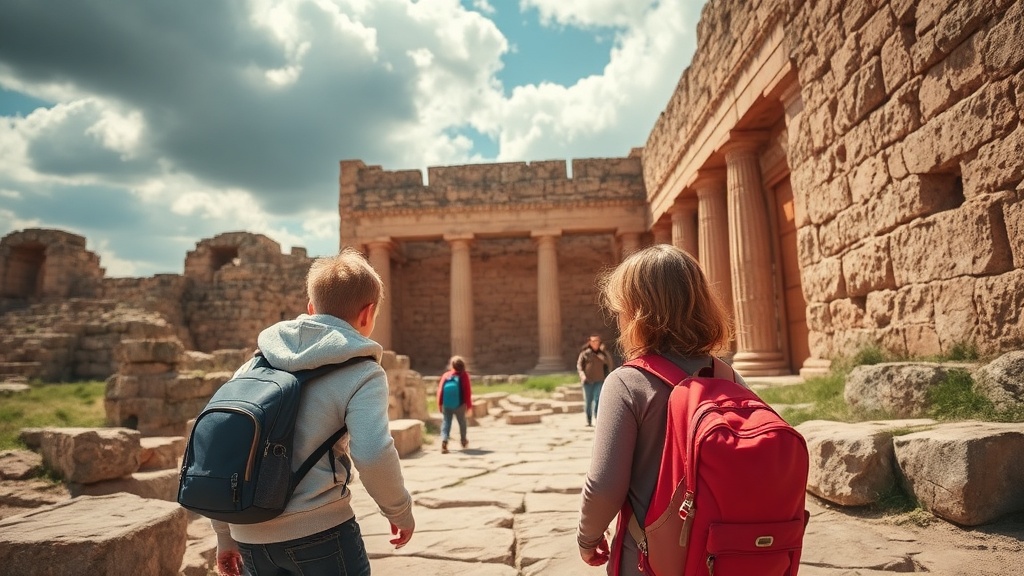
Exploring Ancient Ruins with Kids Without the Meltdowns

The heat radiates off the limestone blocks of Chichén Itzá, and the sound of a thousand tourists creates a low-frequency hum that makes your teeth ache. Somewhere near the base of El Castillo, a six-year-old is currently having a full-scale existential crisis because their water bottle is slightly lukewarm. This is the reality of historical travel with children: you aren't just looking at ruins; you are managing a high-stakes logistics operation in a high-heat, high-sensory environment. This guide provides tactical strategies for visiting archaeological sites like Machu Picchu, the Roman Forum, or the Acropolis without losing your sanity or your temper.
Manage Expectations with the "One Big Thing" Rule
The biggest mistake parents make is treating a historical site like a standard museum. In a museum, you control the climate and the walking speed. At an archaeological site, you are at the mercy of the sun, the terrain, and the sheer scale of the landscape. If you try to see every temple, every altar, and every carved relief, you will hit a wall of resistance by 10:00 AM.
Implement the One Big Thing rule. Choose one major landmark—the centerpiece of the site—and make that your primary objective. If you are at Pompeii, perhaps the goal is seeing the Forum. Once that goal is achieved, the mission is a success. Everything else is a bonus. This prevents the "Are we there yet?" loop and allows you to pivot to a more relaxing activity if the kids hit their limit early.
Use Visual Scavenger Hunts
Standing in front of a pile of rocks is boring for a child. To a seven-year-old, a thousand-year-old ruin is just a very large, very hot playground that they aren't allowed to touch. To keep them engaged, give them a job. Instead of telling them to "look at the architecture," give them a specific mission.
- The Color Hunt: Ask them to find three different types of stone or three different colors of plants growing near the ruins.
- The Shape Search: Challenge them to find a circle, a triangle, and a square carved into the stone.
- The Animal Spy: Many ruins feature carvings of animals (like the jaguars at Tikal). Ask them to find the "hidden animals" in the carvings.
This turns a passive, grueling walk into an active game, shifting their focus from the discomfort of the heat to the engagement of the hunt.
The Logistics of Survival: Gear and Fuel
In my previous life, I managed complex projects with razor-thin margins for error. I learned that most "emergencies" are actually just failures in resource management. When traveling to ruins, your resources are hydration, shade, and blood sugar. If any of these dip, a meltdown is inevitable.
The Tactical Snack Bag
Do not rely on the overpriced, lukewarm snacks sold at the entrance gate. By the time you reach the actual ruins, the line for the snack vendor will be 30 minutes long, and your child will be hungry now. Pack a dedicated snack bag that stays on your person or in a front-facing backpack.
Include high-protein, low-mess items. Think Kind Bars, dried mango, or beef jerky. Avoid anything that melts (chocolate) or creates a massive crumb mess (flaky pastries). A "special" snack reserved only for the ruins—perhaps a specific brand of fruit leather or a unique cracker—can act as a powerful incentive when the group is halfway through a steep climb.
Hydration Strategies
Hydration is not just about drinking water; it is about maintaining electrolyte levels. In high-heat environments like the Valley of the Incas, plain water often isn't enough. Carry Liquid I.V. packets or Nuun tablets to add to your water bottles. This helps prevent the fatigue that often leads to irritability. If you are traveling with toddlers, consider insulated water bottles like a Yeti Rambler or Hydro Flask to ensure their water stays cold for hours, rather than becoming a lukewarm liquid that they refuse to touch.
Timing and Terrain Management
The time of day you arrive at a site dictates the success of the entire excursion. Most people arrive at 10:00 AM or 11:00 AM, which is exactly when the sun is at its most punishing and the crowds are at their peak. If you can, aim for the "First Entry" or "Last Entry" windows.
Arriving at 8:00 AM offers cooler temperatures and more breathing room. If you are visiting a site with significant elevation changes or uneven stairs, like the Acropolis in Athens, you must prepare for the physical toll. Wear sturdy footwear—tell your kids that "adventure shoes" are required, not sandals. This isn't just about comfort; it's about preventing trips and falls on uneven, ancient stone.
If you find yourself in a situation where the terrain is too much, don't be afraid to seek out quiet play in busy areas or nearby parks to decompress. Sometimes, the best way to "see" the ruins is to sit in the shade of a nearby tree and look at them from a distance for twenty minutes.
The "Exit Strategy" Protocol
Every successful project has a contingency plan. In family travel, your contingency plan is the Exit Strategy. Before you even leave the hotel, define what "done" looks like. Is it after two hours? Is it once the kid has finished their protein bar? Is it when the temperature hits 85 degrees?
Establish a "Code Word" with your partner or older children. If one of you notices the energy levels dropping or the tension rising, use the code word to signal that it is time to wrap up the exploration and head toward the exit or the car. This allows you to end the activity on a neutral note rather than waiting for a full-blown tantrum to force your hand.
When the mission is over, celebrate the win. Instead of focusing on the heat or the long walk, focus on the fact that you "conquered" the ruins. Acknowledge the achievement: "We saw the Great Pyramid and we did it together! Now, let's go get that gelato we talked about."
Essential Packing List for Archaeological Sites
To avoid the frantic search for a sun hat or a band-aid mid-climb, have a standardized kit ready. I recommend a small, dedicated "Site Pouch" that lives in your daypack.
- Sun Protection: A high-SPF mineral sunscreen (like EltaMD or Neutrogena) and wide-brimmed hats.
- The "First Aid" Essentials: Band-aids for blisters, antiseptic wipes, and a small bottle of hand sanitizer.
- Sensory Tools: A pair of noise-canceling headphones or even simple earplugs. If the crowds and the noise become overwhelming, these can provide a much-needed sensory break.
- Wet Wipes: Not just for messy hands, but for cooling down a hot neck or face.
- Portable Power: A Anker power bank. You will likely be taking many photos, and a dead phone means no GPS and no way to look up facts to keep the kids engaged.
By treating these excursions as tactical operations rather than casual strolls, you move from a state of constant damage control to a state of managed exploration. The goal isn't a perfect photo of your child standing in front of a temple; the goal is a family that returns to the hotel feeling accomplished rather than exhausted.