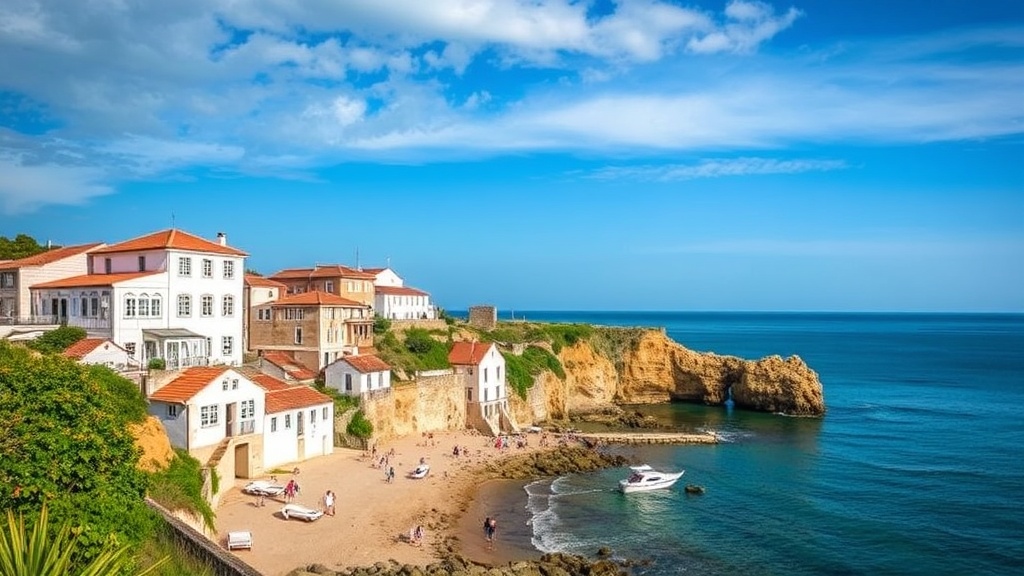
Beyond the Beach: 5 Coastal Villages in Portugal for Slow Family Living

Azenhas do Mar: The Cliffside Dream
Ferragudo: Traditional Charm by the Water
Olhão: Exploring the Ria Formosa Islands
Cascais: Where History Meets the Sea
Vila Nova de Milfontes: Atlantic Serenity
The sun is setting over the Atlantic, casting a long, amber shadow across a cobblestone street in Cascais. A four-year-old is currently attempting to use a discarded seashell as a telephone, while a toddler is successfully negotiating for a second scoop of gelato. There is no rigid itinerary. There is no frantic checking of Google Maps to see if the "must-see" monument is still open. Instead, there is the slow, rhythmic sound of the tide and the realization that the most successful family vacation isn't the one where you see everything, but the one where you actually see each other.
For many families, the word "vacation" triggers a subconscious stress response. We treat travel like a high-stakes project with a strict deadline: see the castle, eat the Michelin-starred meal, hit the beach by 10:00 AM. But the Portuguese coast offers a different blueprint. If you move away from the high-density resorts of the Algarve and toward the rugged, salt-crusted villages of the Atlantic coast, you find a rhythm designed for "slow living." This isn't just a travel style; it is a survival tactic for parents who want to actually enjoy their children instead of just managing them in a different time zone.
1. Azenhas do Mar: The Vertical Village
Perched precariously on the cliffs of Sintra, Azenhas do Mar is a visual marvel of whitewashed houses stacked like building blocks against a deep blue sea. It is not a place for high-energy excursions or long-distance hiking; it is a place for vertical relaxation. The village is built into the cliffside, meaning your "commute" from the rental villa to the beach involves stairs, but the payoff is a natural sea pool that is sheltered from the heavy Atlantic swells.
The Strategy: Because the terrain is steep and uneven, skip the heavy stroller. A high-quality ergonomic carrier, like an Ergobaby or a Deuter, is non-negotiable here. The natural rock pools at the base of the cliffs are perfect for younger children because the water is calmer than the open ocean. Spend your mornings watching the waves hit the rocks and your afternoons in a local café, sipping café com leite while the kids watch the fishing boats return to the shore.
Practical Tip: Pack a pair of water shoes for everyone. The rocks in the natural pools can be slippery and uneven. Having a solid grip prevents the inevitable "oops" moment when a child tries to chase a crab through the shallows.
2. Ferragudo: The Fisherman’s Rhythm
While many families flock to the nearby high-rise resorts of Portimão, the village of Ferragudo remains a sanctuary of low-rise charm and narrow, winding alleys. The scent of grilled sardines dominates the air, and the pace of life is dictated by the tides rather than the clock. It is an ideal base for families who want to experience "authentic" Portugal without the stress of a complex itinerary.
The Strategy: Use Ferragudo as a base for "micro-adventures." Instead of booking a full-day boat tour that requires hours of sitting still, rent a small motorboat or a kayak for two hours. This allows you to explore the sea caves at your own pace, retreating to the shore the moment a meltdown begins. This approach mirrors the scavenger hunt strategies used to keep kids engaged during structured activities, but with the freedom of the open water.
Food & Fuel: When dining at the waterfront, don't fight the lack of a "kids' menu." Most local tascas (small taverns) are incredibly accommodating to children. Order a prego (steak sandwich) or fresh grilled fish, and don't be afraid to ask for extra bread. To avoid the mid-afternoon "hangry" crisis, keep a stash of local dried fruits or nuts in your bag—part of a reliable snack survival guide to keep energy levels stable between slow, multi-course lunches.
3. Ericeira: The Surfer’s Sanctuary
Ericeira is a World Surfing Reserve, and that energy permeates the entire town. The vibe here is laid-back, salty, and decidedly unpretentious. The cobblestone streets are lined with colorful boutiques and surf shops, making it a great place for older children who are starting to develop their own sense of style. The town feels alive, but not rushed.
The Strategy: If your children are over the age of six, consider a family surf lesson. The waves in Ericeira are consistent, and the local instructors are used to working with different skill levels. Even if they don't want to surf, the beach culture here is perfect for "passive engagement"—the kids can build sandcastles while you actually sit on a chair and read a book, rather than constantly running back and forth to a beach towel.
Logistics: The wind can pick up quickly in Ericeira. Even if the sun is out, the Atlantic breeze is sharp. Always pack lightweight windbreakers for the family. A child who is cold is a child who will be inconsolable, and a windbreaker is the simplest tool to prevent a sudden shift in mood.
4. Tavira: The Eastern Slow-Down
Located in the eastern Algarve, Tavira is a different beast than the western coast. It is characterized by the Gilão River, Roman bridges, and a collection of islands that are only accessible by small ferry. This geographic barrier is actually a blessing; it forces a slower pace. You cannot rush a ferry crossing, and that is exactly the point.
The Strategy: The ferry ride to the Ilha de Tavira is an adventure in itself. It provides a natural "buffer" between the mainland bustle and the quiet beach. Once on the island, the space is vast. This is the perfect place for children who need to run. There are no fences, no crowded boardwalks—just wide-open sand and the ability to burn off energy. It is a high-yield environment for physical play, which leads to better sleep in the evenings.
Practical Tip: Because the island is separated from the town, you must be meticulous about your "essentials" bag. Ensure you have a dedicated waterproof pouch for electronics and a heavy-duty sunblock. The sun on the eastern Algarve is intense, and the lack of shade on the islands means you need to be proactive about protection.
5. Nazaré: Big Waves, Small Moments
Nazaré is world-famous for its giant waves, which draw crowds of spectators, but the town itself retains a deeply traditional fishing culture. The sight of women in traditional black skirts drying fish on the beach is not a performance; it is a daily reality. For families, Nazaré offers a sense of scale that is both humbling and fascinating.
The Strategy: Visit the Sítio, the upper part of the town, to witness the massive swells from a safe, elevated vantage point. This provides a "spectacle" that can hold a child's attention without the chaos of being down on the sand. It’s a way to provide a "wow" moment that is controlled and safe. The view from the Forte de São Miguel is spectacular and serves as a natural way to ground the family in the sheer power of nature.
The Reality Check: Nazaré can be loud and visually overwhelming. If your children are sensitive to sensory input, plan for "quiet hours" in your accommodation during the peak afternoon swell times. Use these moments for low-stimulation activities like drawing or reading to reset their nervous systems before dinner.
The Toolkit for Coastal Living
To successfully navigate these villages, you need more than just a map; you need a tactical approach to your gear. Slow living is much easier when you aren't constantly searching for a lost pacifier or a missing sandal.
- The "Go-Bag" Mentality: Always have a dedicated bag for the beach that contains more than just towels. Include a small bottle of calming lavender spray or a familiar toy to help with transitions from the sun to the shade.
- Footwear Hierarchy: In Portugal, the terrain dictates the footwear. Sturdy sandals for the cobblestones, water shoes for the rock pools, and easy slip-ons for the ferry rides.
- The Snack Buffer: Do not rely on finding a grocery store the moment a child gets hungry. A small, organized kit of non-perishable snacks is your best defense against the "travel fatigue" that often accompanies new environments.
The goal of traveling to these coastal villages isn't to check every landmark off a list. It is to find the places where the rhythm of the ocean matches the rhythm of your family. When you stop trying to perform "the perfect vacation" and start embracing the slow, salty reality of the Portuguese coast, you might actually find that the best memories aren't the ones you planned, but the ones that happened while you were waiting for the tide to come in.