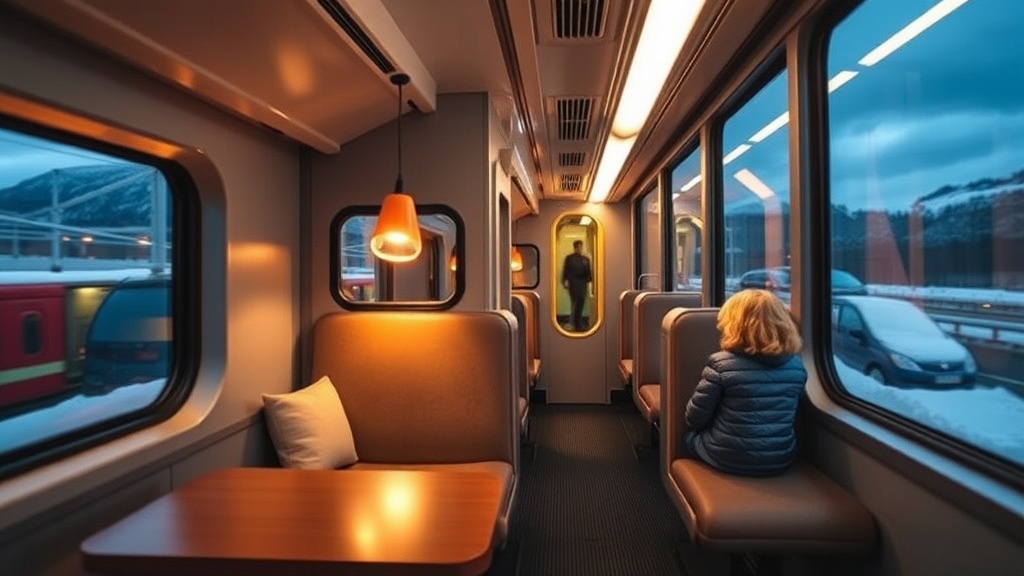
7 Best Train Journeys for Slow Family Travel in Scandinavia

The Flåm Railway in Norway
The Bergen Line Adventure
Sweden's Northern Lights Express
Copenhagen to Stockholm Rail
The Inlandsbanan Journey
Exploring the Danish Coastline
The Arctic Circle Route
According to recent European rail statistics, passenger numbers on long-distance scenic routes have increased significantly as travelers seek more sustainable, low-stress alternatives to short-haul flights. For families, this shift isn't just about the environment; it is about reclaiming the transition time between destinations. Instead of the high-octane stress of airport security and cramped middle seats, Scandinavian train travel offers predictable schedules, ample legroom, and views that actually engage a child's attention. This guide outlines seven specific train journeys through Scandinavia that prioritize space, scenery, and the ability to move around—essential components for any successful family expedition.
1. The Bergen Line: Oslo to Bergen, Norway
The Bergen Line is arguably the most iconic rail journey in Northern Europe, traversing the high mountain plateau of Hardangervidda. This is not a journey for those who want to rush; it is a journey designed for the long haul. The trip typically takes about seven hours, making it a perfect candidate for a "contained" day of travel where the movement is the activity.
Why it works for families
The most significant advantage here is the sheer scale of the landscape. The transition from the lush valleys near Oslo to the stark, snow-capped mountains of the high plateau provides a natural visual stimulus that can keep kids engaged without the need for constant digital intervention. The trains are spacious, and most long-distance carriages feature large windows designed specifically for sightseeing.
Tactical Tips
- Book a Family Compartment: If traveling with a group, look for private or semi-private compartments. Having a defined boundary helps manage the "cabin fever" that often sets in around hour four.
- The Snack Strategy: While there is a dining car (often serving Norwegian staples like open-faced sandwiches), the menu is limited. Pack high-protein snacks like nuts or dried fruit to avoid the "hangry" meltdown during the high-altitude stretch.
- The Audio Element: Download long-form audiobooks or podcasts. The rhythmic motion of the train is the perfect backdrop for storytelling.
2. The Flåm Railway: Myrdal to Flåm, Norway
If the Bergen Line is the marathon, the Flåm Railway (Flåmsbana) is the high-intensity sprint. This steep, narrow-gauge railway descends from the mountain station of Myrdal down to the Aurlandsfjord. It is short, intense, and incredibly visually striking.
Why it works for families
Because the journey is relatively short (about 20 minutes), it is much easier to manage younger children who struggle with long periods of confinement. The dramatic waterfalls, such as the Kjosfossen waterfall, are visible right from the window, offering a "wow" moment that is easily digestible for small children.
Tactical Tips
- Window Seating is Mandatory: Ensure your family is seated on the side of the train facing the falls. If you are on the wrong side, you miss the primary attraction.
- Connectivity: This is a high-impact visual experience, so it is a great time to practice scavenger hunt strategies. Ask children to spot specific colors or types of waterfalls to keep them looking out the window.
3. The Inlandsbanan: Mora to Gällivare, Sweden
The Inlandsbanan is the ultimate test of slow travel. This route cuts through the heart of Swedish Lapland, moving through vast forests, lakes, and reindeer territories. It is much less "touristy" than the Norwegian lines, offering a more rugged, authentic experience.
Why it works for families
This is a journey for families who have already mastered the basics of travel and are looking for deep immersion. The pace is slow, and the destinations are remote. It provides a unique opportunity to see the northern wilderness without the logistical headache of a multi-car rental. It is also an excellent way to transition toward the Arctic Circle.
Tactical Tips
- Manage Expectations: This is not a high-speed rail experience. Embrace the slow pace. This is a time for finding quiet play—think card games, drawing, or reading—rather than constant movement.
- Prepare for Temperature Swings: Even in summer, the northern latitudes can be unpredictable. Ensure every family member has a dedicated "travel kit" with layers and a warm hat, even if you are sitting in a heated carriage.
4. The Øresund Connection: Copenhagen to Stockholm
While this route is more frequent and serves as a vital transport artery, it offers a wonderful way to see the transition from the flat, coastal landscapes of Denmark to the forested terrains of Sweden. This is a high-utility route that connects two major hubs efficiently.
Why it works for families
The infrastructure is highly reliable and modern. The trains are frequent, which reduces the pressure of "missing the train" if a delay occurs during a hotel check-out. The route is also excellent for older children and teenagers who might require more reliable Wi-Fi and power outlets for device charging.
Tactical Tips
- The Bridge Experience: The crossing of the Øresund Bridge is a highlight. It is a massive engineering feat that usually captures the attention of kids.
- Meal Planning: Since this route passes through major hubs, you can easily grab high-quality food at stations like Malmö or Copenhagen Central. However, always carry a backup of "safe foods" for children who are picky about new environments.
5. The Skagerrak Line: Oslo to Gothenburg, Norway/Sweden
This route connects the Norwegian capital with the Swedish west coast. It is a highly practical route for families planning a multi-country Scandinavian tour, offering a blend of coastal views and dense forest scenery.
Why it works for families
The journey is well-serviced and generally very comfortable. It serves as a great "bridge" journey—one that moves you from one cultural environment to another without the exhaustion of a flight. The ability to walk through the carriages to the bistro car is a vital tool for managing restless energy.
Tactical Tips
- The "Walking" Rule: Establish a rule that children can walk the aisles during certain times to prevent them from feeling trapped. This helps regulate their sensory input.
- Packing Light: Even though you are on a train, you are likely moving between cities. Follow the principles of packing a carry-on for a long trip to ensure you aren't struggling with heavy luggage at every transfer point.
6. The Arctic Circle Express: Narvik to Kiruna, Sweden
This is a specialized route that takes you through the extreme north. It is often part of a larger journey involving the Norwegian coast, but the stretch through Swedish Lapland is particularly spectacular, especially during the winter months when the Aurora Borealis might be visible.
为什么 it works for families
For families with older children or teens, this journey feels like an adventure into the unknown. The scenery is otherworldly, and the logistical simplicity of the train makes it an easier way to reach the remote north than driving on icy, winding roads.
Tactical Tips
- Night Travel: If you are traveling at night, the darkness can be an opportunity for stargazing or Aurora hunting. Ensure you have high-quality binoculars or a camera with a tripod for the adults.
- The Sensory Kit: The extreme cold outside versus the warmth inside can be a jarring sensory experience. Have heavy layers ready for when you step off the train at stations.
7. The Coastal Route: Trondheim to Bodø, Norway
While technically a combination of rail and ferry in some segments, the rail journey through the central Norwegian coast is a masterclass in slow travel. It moves through some of the most dramatic fjords and coastal mountains in the world.
Why it works for families
This journey is about the destination as much as the transit. It allows families to see the ruggedness of the Norwegian coast in a way that is much more comfortable than a small coastal ferry. It is a high-reward journey for those willing to commit to the long transit time.
Tactical Tips
- The Transition Plan: Because this route often involves transfers (sometimes to ferries), have a "transition kit" ready. This should include a small backpack with essential snacks, a change of socks, and any necessary medications so you aren't digging through large suitcases during a transfer.
- Visual Engagement: Use a physical map. Show the children where you are on the map every hour. It turns a long transit into a tangible progress-based game.